
Social & Emotional Development
Social & Emotional Development in Dedham, MA
Introduction to Social & Emotional Development
At Bright Beginnings Bilingual Program in Dedham, Massachusetts, we believe that social and emotional development is the heart of early childhood education. Academic skills are important, but before children can learn numbers and letters, they need to feel secure, valued, and confident. That’s why our licensed, home-based daycare emphasizes responsive relationships, cooperative play, and emotional awareness as much as literacy and language.
From infancy through toddlerhood, children are learning how to understand their own feelings, connect with others, and build self-confidence. These experiences are as important as learning to walk or talk. In our bilingual, nurturing environment, children practice these skills daily through guided play, routines, and consistent caregiving from CPR-certified staff.
Key Benefits of Social & Emotional Development at Bright Beginnings
Secure Attachments
Infants experience responsive care that builds trust and supports long-term resilience.
Emotional Vocabulary
Children learn to identify emotions like happy, sad, mad, and excited in both English and Spanish.
Cooperation and Sharing
Toddlers practice group play, turn-taking, and problem-solving with gentle guidance.
Confidence and Independence
Small achievements, like pouring water or cleaning up toys, build a sense of capability.
Positive Guidance
Instead of punishment, we use modeling, redirection, and encouragement to shape behavior.
Family Partnerships
We collaborate with parents to reinforce emotional growth strategies at home.
Bilingual Advantage
Expressing emotions in both English and Spanish strengthens communication and cultural awareness.
Why Social & Emotional Development Matters
Research shows that children who develop strong social and emotional skills are more resilient, adaptable, and successful later in life. In early childhood, these skills form the foundation for:
- Self-regulation – Learning how to manage emotions like frustration or excitement.
- Healthy relationships – Building trust with caregivers and learning to cooperate with peers.
- Empathy – Recognizing others’ feelings and responding with kindness.
- Confidence – Developing a positive sense of self and belief in their abilities.
For infants, social and emotional development begins with trust. When caregivers respond consistently to cries and cues, infants learn that their needs will be met. For toddlers, the focus shifts to independence, cooperation, and learning how to express feelings appropriately. At Bright Beginnings, we see every routine—from feeding and diapering to group play—as an opportunity to nurture these essential skills.
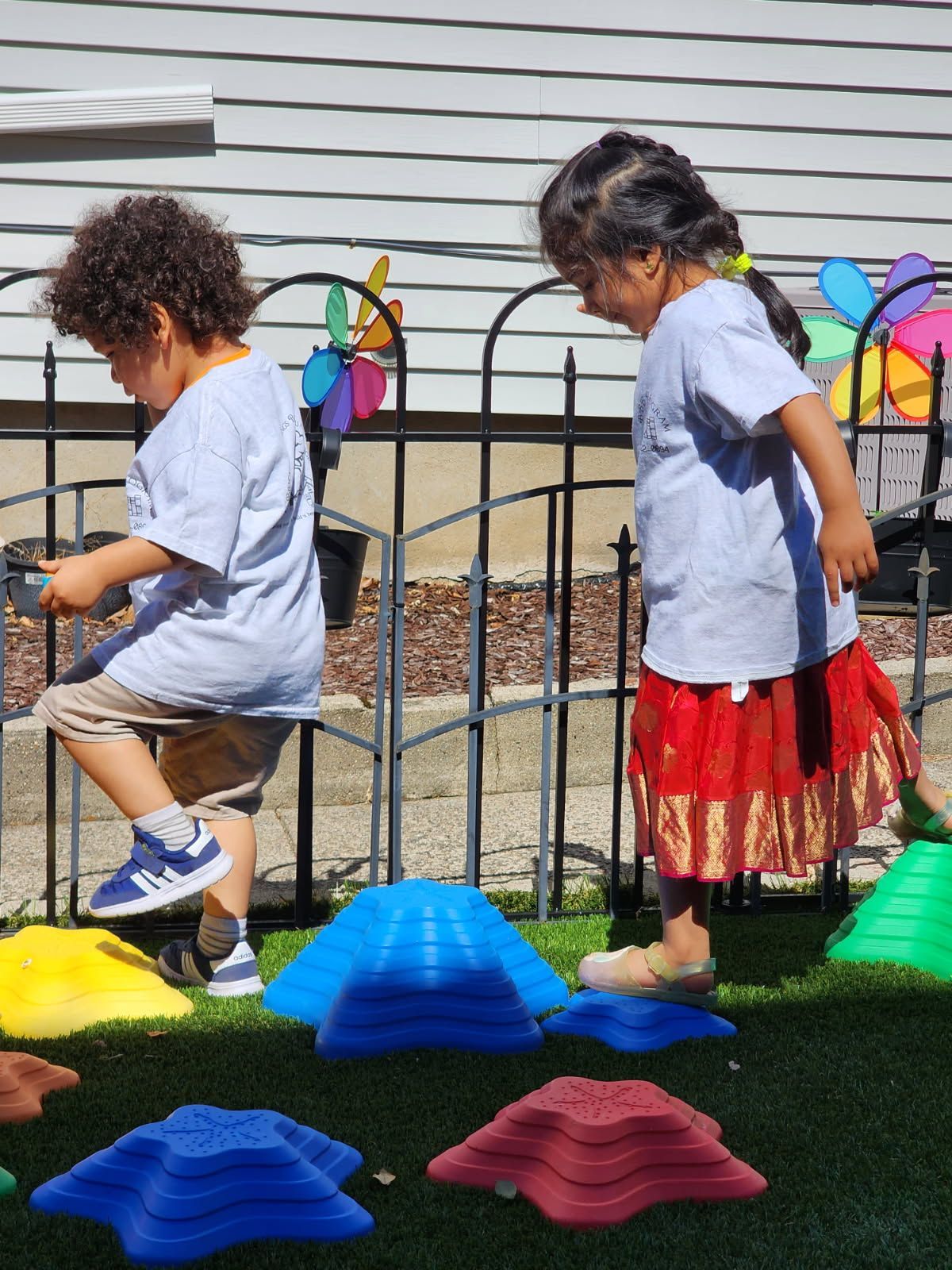
How Bright Beginnings Fosters Social & Emotional Growth
Our home-based setting is designed for small groups, which means children benefit from consistent caregivers and fewer transitions. This stability helps infants and toddlers feel safe enough to take risks, try new activities, and develop relationships.
We integrate social and emotional learning into every part of the day:
- Circle time includes songs and stories about emotions, often in both English and Spanish.
- Free play provides opportunities for cooperation, where toddlers practice sharing blocks or taking turns with puzzles.
- Outdoor play encourages teamwork, whether it’s taking turns on a slide or exploring nature together.
- Routine tasks like handwashing or snack preparation help children build independence and pride.
- Conflict resolution is guided with patience, teaching children to use words, recognize feelings, and find solutions together.
We also know that infants and toddlers express emotions differently. Infants communicate through cries, gestures, and facial expressions, and our caregivers respond quickly with comfort and reassurance. Toddlers are encouraged to use words, picture cues, and bilingual vocabulary to express needs and feelings. Over time, children develop stronger self-regulation and empathy, which prepares them for the structure of preschool and beyond.
FAQs
What is social and emotional development?
It is the process of learning to understand and manage emotions, build relationships, and develop confidence.
How do infants develop these skills?
Infants develop trust and security through consistent caregiving, eye contact, soothing comfort, and responsive interactions.
How do toddlers practice social skills?
Toddlers learn through group play, sharing activities, problem-solving, and guided routines with supportive caregivers.
Why is this important for school readiness?
Children with strong social-emotional skills adapt more easily to group learning, follow directions, and form positive relationships with teachers and peers.
Do you integrate bilingual learning into emotional development?
Yes. We use both English and Spanish to label emotions and feelings, helping children expand vocabulary and cultural understanding.
Contact Us to Support Your Child’s Growth
Families in Dedham looking for a daycare that emphasizes social and emotional growth will find a supportive partner in Bright Beginnings Bilingual Program. Our licensed, bilingual, home-based environment is designed to nurture the whole child—socially, emotionally, physically, and intellectually.